
Blog
Hemostatic Forceps Explained: Mosquito, Kelly, Crile, Rochester-Pean and Kocher

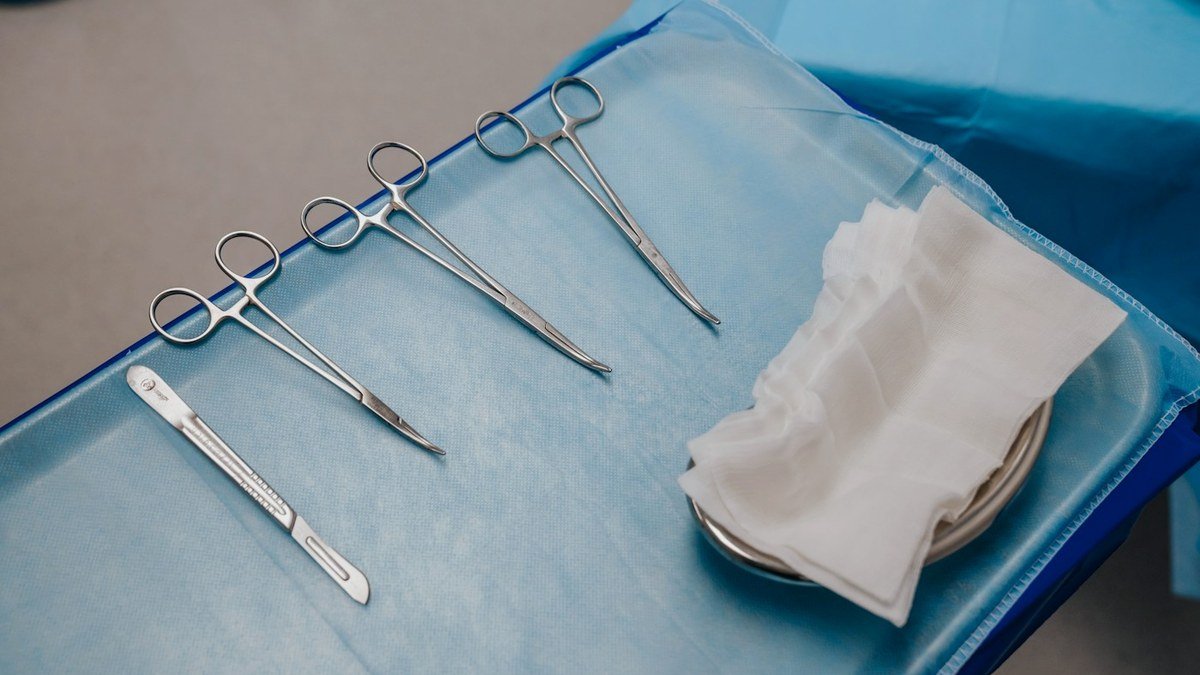
Hemostatic forceps, often just called hemostats, are among the most used instruments on any surgical tray. They clamp blood vessels and hold tissue, and they lock with a ratchet so the surgeon’s hands are free. Many patterns look alike at first glance, but the differences in size, jaw serrations and teeth decide where each one belongs. Here is how to tell the main types apart.
Halsted Mosquito forceps
Mosquitos are the smallest common hemostat, usually around 12.5 cm (5″) long, with fine, delicate jaws and full-length horizontal serrations. They are used for small vessels and fine work in plastic surgery, paediatrics, dentistry and veterinary practice. They come in straight and curved patterns.
Kelly forceps
Kelly forceps are a little larger, typically about 14 cm (5.5″). The key detail is that the serrations cover only the front half of the jaw. They are a general-purpose hemostat for medium vessels and for grasping tissue.
Crile forceps
Crile forceps are a similar size to Kelly forceps, but the serrations run the full length of the jaw. That gives a more even grip along the whole jaw. Many surgeons choose between Kelly and Crile purely by preference, so most trays carry both.
Rochester-Pean forceps
Rochester-Pean forceps are larger, commonly from 16 cm up to 25 cm (6.25″ to 10″), with heavier jaws and full-length serrations. They are used to clamp larger vessels and tissue bundles, for example in abdominal and gynaecological surgery.
Rochester-Ochsner (Kocher) forceps
These look like Rochester-Pean forceps but have 1×2 interlocking teeth at the tip. The teeth stop tough or slippery tissue such as fascia from sliding out. Because of the teeth they are not used on delicate tissue or vessels that must not be punctured.
Specialty patterns
- Schnidt (tonsil) forceps have long, slender shanks with slightly curved jaws for deep, narrow spaces such as tonsil beds.
- Mixter (right-angle) forceps have jaws bent at roughly 90 degrees for passing ligatures around vessels and ducts.
- Carmalt forceps have longitudinal serrations with cross-hatching at the tip and are often used to clamp vascular pedicles in hysterectomy.
Straight or curved?
Curved jaws give better visibility and let the surgeon work around structures. Straight jaws are used on the surface and when the clamp needs to sit flat. Most general sets include both.
What to look for in quality
- Jaws that meet evenly from heel to tip, with serrations that mesh cleanly
- A ratchet that holds firmly at each step and releases smoothly
- A tight, well-finished box lock with no play
- Surgical-grade stainless steel with a satin, non-glare finish
You can browse our full range of hemostatic and clamping forceps or our surgical instruments. For wholesale quantities or mixed trays, request a quote.