
Blog
Surgical Scissors Explained: Mayo, Metzenbaum, Iris and Other Common Patterns

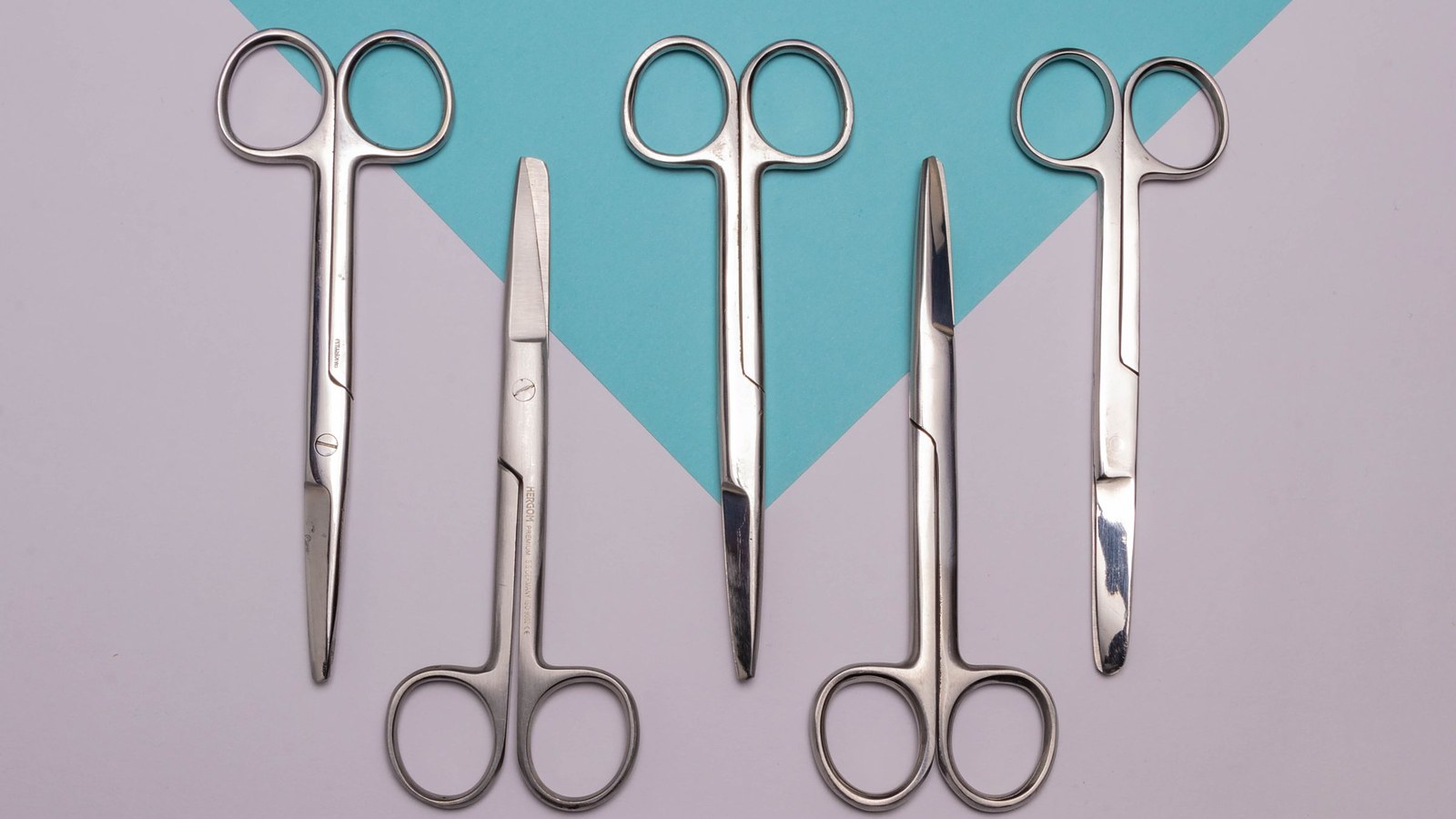
Almost every surgical tray carries more than one pair of scissors, and for good reason. A pair designed for heavy fascia will tear delicate tissue, and fine dissecting scissors are quickly damaged if they are used to cut sutures or dressings. Knowing what each pattern is made for saves money, keeps edges sharp for longer and gives the surgeon the right tool for the job. Here is a practical guide to the scissors we are asked about most.
The basics: tips, blades and shape
- Tips. Scissors are described by their points: sharp/sharp, sharp/blunt or blunt/blunt. Sharp tips pierce and cut precisely. Blunt tips push tissue aside without puncturing it and are safer close to vessels, organs or skin.
- Straight or curved. Straight scissors are used on the surface and for cutting sutures and materials. Curved blades follow tissue planes, give the surgeon a better view of the tips and are preferred for dissection.
- Blade edge. Standard blades have plain edges. SuperCut scissors have one razor-sharp blade that slices cleanly with less crushing. Some patterns have one finely serrated blade to stop tissue or suture slipping.
- Tungsten carbide. Gold-handled scissors have tungsten carbide inserts on the cutting edges, which stay sharp far longer than plain stainless steel.
Mayo scissors
Mayo scissors are the heavy-duty dissecting scissors of the operating room. They have semi-blunt, rounded tips and strong blades, and they are used to cut thick tissue such as fascia, muscle and tendon. Straight Mayo scissors are also commonly used to cut sutures near the surface, while curved Mayo scissors are used for deeper dissection. See our Mayo dissecting scissors.
Metzenbaum scissors
Metzenbaum scissors look similar to Mayo scissors but are finer, with a long shank and short blades relative to their length. That combination gives reach and control in deep cavities without bulk at the tip. They are meant for delicate tissue only and should never be used on sutures, wire or dressings, which blunt the blades quickly. Most surgeons prefer the curved pattern. See our Metzenbaum dissecting scissors.
Iris scissors
Iris scissors are small, typically around 9 to 11.5 cm, with fine sharp tips. Originally designed for eye surgery, they are now used wherever small, precise cuts are needed, from plastic and dermatology procedures to dentistry and veterinary work. They come straight or curved. For even finer work there are micro patterns, such as Noyes iris scissors and Castroviejo spring-action micro scissors.
Stitch and suture scissors
Stitch scissors are made for removing sutures. One blade has a small hook or notch at the tip that slides under the stitch and lifts it, so the suture can be cut without nicking the skin. They are a staple of clinics and dressing rooms. See our stitch scissors.
Operating scissors
Operating scissors are general-purpose surgical scissors, available in sharp/sharp, sharp/blunt and blunt/blunt combinations, straight or curved. They are used for cutting tissue, sutures and dressings during routine procedures, and many clinics keep several tip combinations on hand. Browse our operating scissors.
Bandage scissors
Bandage scissors, such as the Lister pattern, have angled blades and a flat, blunt lower tip. The blunt tip slides under a bandage or dressing against the skin without cutting the patient. They are used in wards, emergency rooms and clinics rather than in surgery itself. See our Lister bandage scissors and the full bandage and plaster shears range.
Specialty patterns
- Tonsil scissors, such as Metzenbaum, Boettcher and Prince patterns, are long and curved for working deep in the throat.
- Potts-Smith scissors have angled blades for opening vessels in vascular and cardiac surgery.
- Wire-cutting scissors have short, strong blades, often with a notch, so that fine wire does not damage regular surgical scissors.
How to choose
- Match the scissors to the tissue: Mayo for tough tissue, Metzenbaum for delicate dissection, iris and micro scissors for fine work.
- Keep separate scissors for sutures, dressings and wire, so your dissecting scissors stay sharp.
- Choose curved blades for dissection and straight blades for cutting on the surface.
- Consider SuperCut or tungsten carbide for scissors that are used every day.
What to check for quality
- The blades should cut cleanly all the way to the tips. Test on a piece of wet gauze or thin latex.
- The action should feel smooth and even, with no grinding or sideways play at the screw.
- The tips should meet exactly when closed.
- The finish should be smooth, with no burrs on the edges or in the joint.
Scissors last longest when they are cleaned promptly and handled carefully. Our guide on cleaning and sterilizing surgical instruments covers the full routine. Browse our dissecting scissors and micro and iris scissors, or contact us for wholesale and private-label orders.