
Blog
How to Choose a Needle Holder: Mayo-Hegar, Olsen-Hegar, Webster, Castroviejo and More

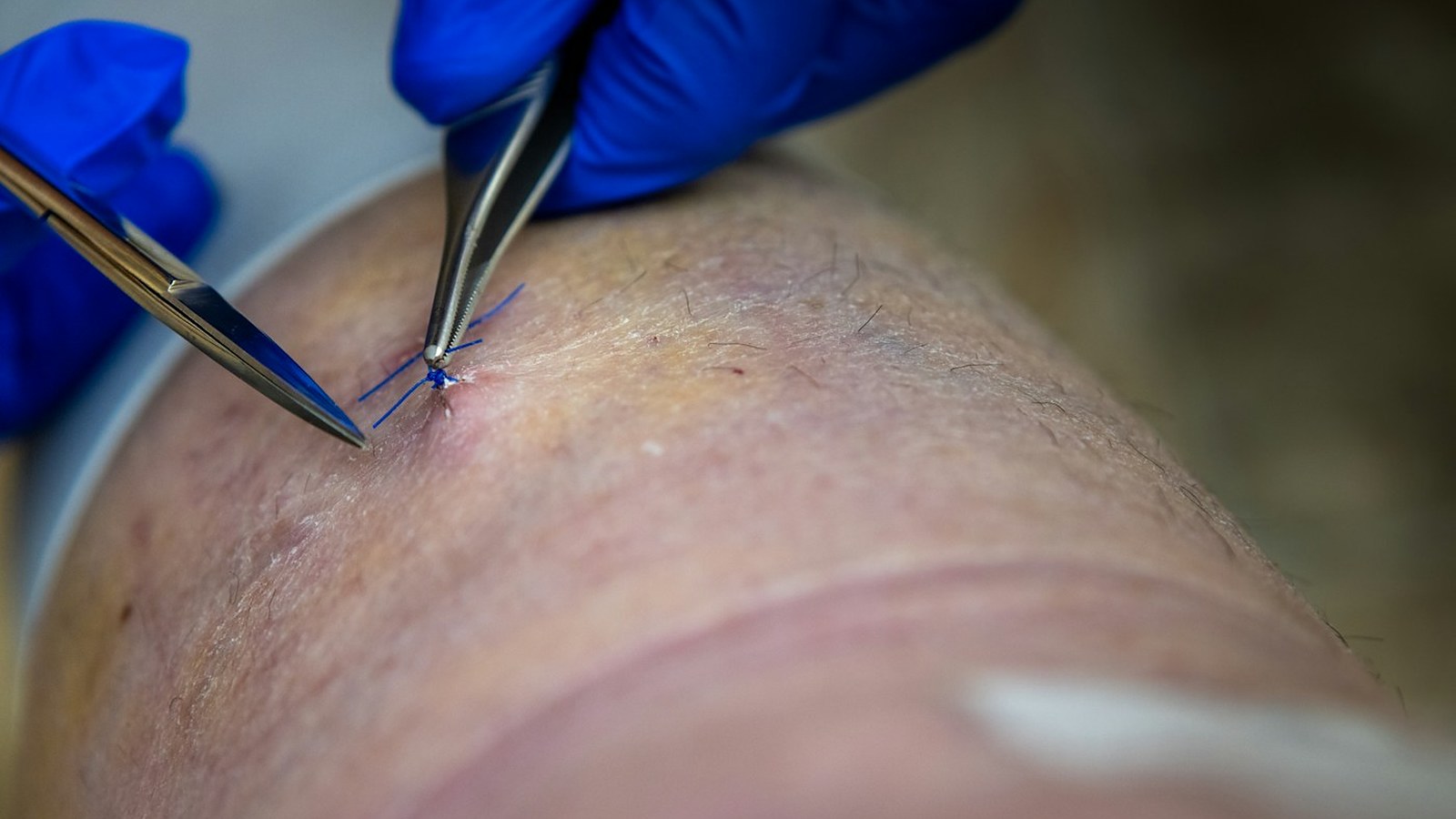
A needle holder does one job: it grips a curved suture needle firmly enough that the needle does not twist or slip while it is driven through tissue. That sounds simple, but the right pattern depends on the needle size, how deep the surgeon is working and how fine the work is. A needle holder that is too heavy crushes a fine needle. One that is too light lets a large needle rotate in the jaws. Here is how the common patterns compare.
What actually differs between needle holders
- Jaw size and shape. Short, narrow jaws are for small needles and fine suture. Longer, wider jaws are for heavier needles.
- Jaw surface. Fine cross-serrations grip small needles without damaging them. Coarser serrations hold larger needles. Smooth jaws are used with very fine suture so the thread is not frayed.
- Locking mechanism. Most needle holders have a ratchet between the finger rings. Micro needle holders such as the Castroviejo use a spring handle with a lock instead.
- Length. Short instruments give more control at the surface. Longer ones reach into deep body cavities.
- Jaw insert. Plain stainless steel jaws, or tungsten carbide inserts, which are marked by gold handles.
Mayo-Hegar
The Mayo-Hegar is the general-purpose needle holder found on most surgical trays. It has a ratchet, cross-serrated jaws and comes in lengths from about 14 cm to 25 cm and more. The standard sizes cover skin and general soft-tissue closure. The longer sizes are used in abdominal and pelvic surgery. If you only stock one pattern, this is usually it. See our Mayo-Hegar needle holder.
Olsen-Hegar
The Olsen-Hegar is a Mayo-Hegar with a pair of scissors built in behind the jaws. The surgeon can tie a knot and cut the suture without changing instruments. That makes it popular in minor surgery, emergency rooms, dentistry and veterinary practice, where one person often sutures alone. The trade-off is that you have to take care not to cut the suture by accident while tying. See the Olsen-Hegar needle holder.
Webster and Derf
Webster and Derf needle holders are short, light patterns, typically around 12 to 13 cm, with fine jaws. They are used with small needles in plastic surgery, facial work, hand surgery and paediatrics. Webster needle holders are made with either smooth or serrated jaws. Choose smooth jaws for very fine suture. See the Webster needle holder and the Derf needle holder.
Crile-Wood
The Crile-Wood has narrower, more tapered jaws than a Mayo-Hegar of the same length. The slimmer tip makes it easier to work in confined spaces and to handle smaller needles, while still having a ratchet. It is common in general, gynaecological and dental surgery. See the Crile-Wood needle holder.
Castroviejo
The Castroviejo is a micro needle holder. Instead of finger rings it has a spring-action handle held like a pencil, with a lock that can be engaged or left off. It is used with very fine needles in ophthalmic, microvascular, hand and plastic surgery, where small finger movements must translate into precise needle control. Jaws come straight or curved, smooth or serrated. See our Castroviejo needle holders.
Matching the needle holder to the needle
A practical rule is to match the jaw to the needle, not the other way round:
- Fine needles and fine suture: Castroviejo, Webster or Derf, often with smooth or very fine serrated jaws.
- Medium needles for general closure: Mayo-Hegar, Olsen-Hegar or Crile-Wood in 14 to 18 cm.
- Large needles and deep work: longer Mayo-Hegar patterns with heavier jaws.
Grip the needle about one third of the way back from the swaged end, close to the tips of the jaws. Clamping a fine needle in a heavy jaw, or clamping too close to the swage, can bend or flatten the needle.
Is tungsten carbide worth it?
Tungsten carbide inserts are much harder than stainless steel. They grip the needle more securely, resist wear far longer and can be replaced when they finally wear out, rather than the whole instrument being thrown away. For needle holders that are used every day, the extra cost usually pays for itself. You can read more in our article on what the gold handles mean.
What to check before you buy
- Hold the closed jaws up to the light. They should meet evenly with no gap at the tip.
- Clamp a needle on the first ratchet tooth. It should not rotate when you push on it.
- The ratchet should hold on every tooth and release cleanly without sticking.
- The box lock should be tight, with no sideways play.
Every needle holder we make is checked for jaw alignment and ratchet action before it is packed. Browse our full range of needle holders, or send us your requirements for wholesale and private-label orders.